结核与肺部疾病杂志 ›› 2026, Vol. 7 ›› Issue (3): 323-328.doi: 10.19983/j.issn.2096-8493.20260056

• 健康照护 • 上一篇    下一篇

老年肺栓塞患者心理痛苦动态变化轨迹及影响因素分析

陈培英1(), 刘翠萍2, 郑丽娇1   

  1. 1 福建省莆田学院附属医院急诊重症医学科, 莆田 351100
    2 福建省莆田学院附属医院肝胆外科, 莆田 351100
  • 收稿日期:2026-03-24 出版日期:2026-06-20 发布日期:2026-06-12
  • 通信作者: 陈培英 E-mail:chenpeiyingcpy@163.com

Analysis of the dynamic changes and influencing factors of psychological pain in elderly patients with pulmonary embolism

Chen Peiying1(), Liu Cuiping2, Zheng Lijiao1   

  1. 1 Emergency and Critical Care Medicine Department, Affiliated Hospital of Putian University, Fujian Province, Putian 351100, China
    2 Department of Hepatobiliary Surgery, Affiliated Hospital of Putian University, Fujian Province, Putian 351100, China
  • Received:2026-03-24 Online:2026-06-20 Published:2026-06-12
  • Contact: Chen Peiying E-mail:chenpeiyingcpy@163.com

摘要:

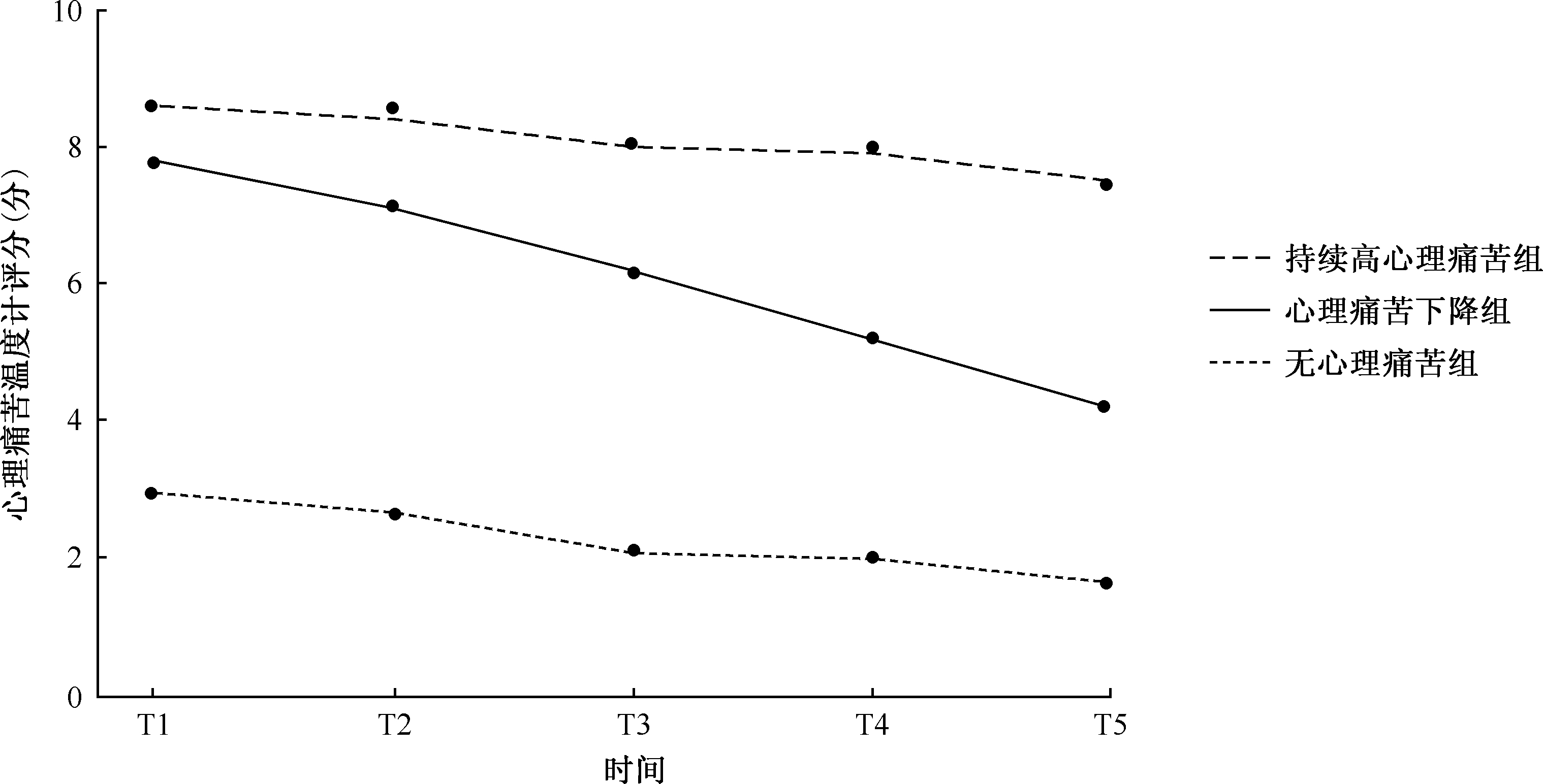
目的: 基于潜变量混合增长模型分析老年肺栓塞患者心理痛苦的发展轨迹及影响因素分析。方法: 选取2023年6月至2025年4月福建省莆田学院附属医院收治的230例老年肺栓塞患者为研究对象,采用一般资料调查表、心理痛苦温度计对患者进行调查。对患者心理痛苦构建潜变量增长混合模型,采用logistic回归分析影响老年肺栓塞患者心理痛苦的因素。结果: 根据潜变量混合增长模型结果显示,识别出3种潜在类别,分别为持续高心理痛苦组(32例,13.91%)、心理痛苦下降组(112例,48.70%)、无心理痛苦组(86例,37.39%)。多因素logistic回归分析显示,年龄、文化程度、付费类型、月收入均为老年肺栓塞患者持续高心理痛苦[OR(95%CI)值分别为:1.318(1.141~1.522)、3.414(1.018~11.450)、3.250(1.048~10.075)、3.763(1.052~13.461)]和心理痛苦下降[OR(95%CI)值分别为:1.120(1.045~1.199)、2.147(1.143~4.032)、1.912(1.037~3.527)、1.913(1.029~3.555)]的影响因素。结论: 老年肺栓塞患者心理痛苦存在3种不同的发展轨迹,其中,年龄、文化程度、付费类型、月收入均为患者持续高心理痛苦和心理痛苦下降的影响因素。

关键词: 肺栓塞, 老年人, 心理学, 医学, 因素分析, 统计学

Abstract:

Objective: To analyze the developmental trajectory of psychological distress in elderly patients with pulmonary embolism and explore its influencing factors based on a latent variable mixed growth model. Methods: A total of 230 elderly patients with pulmonary embolism admitted to the Affiliated Hospital of Putian University in Fujian Province from June 2023 to April 2025 were selected as the research subjects. General information questionnaires and psychological distress thermometers were used to investigate the patients. A latent variable growth mixed model was constructed for patients’ psychological distress, and logistic regression analysis was employed to analyze the factors influencing psychological distress in elderly patients with pulmonary embolism. Results: According to the results of the latent variable growth mixed model, three latent categories were identified: the persistently high psychological distress group (32 cases, 13.91%), the decreasing psychological distress group (112 cases, 48.70%), and the no psychological distress group (86 cases, 37.39%). Multivariate logistic regression analysis revealed that age, education level, payment type, and monthly income were influencing factors for persistently high psychological distress (OR (95%CI) values were: 1.318 (1.141-1.522), 3.414 (1.018-11.450), 3.250 (1.048-10.075), 3.763 (1.052-13.461), respectively) and decreasing psychological distress (OR (95%CI) values were: 1.120 (1.045-1.199), 2.147 (1.143-4.032), 1.912 (1.037-3.527), 1.913 (1.029-3.555), respectively) in elderly patients with pulmonary embolism. Conclusion: There are three different developmental trajectories of psychological distress in elderly patients with pulmonary embolism. Among them, age, education level, payment type, and monthly income are all influencing factors for patients’ sustained high psychological distress and the decrease in psychological distress.

Key words: Pulmonary embolism, Aged, Psychology, medical, Factor analysis, statistical

中图分类号: